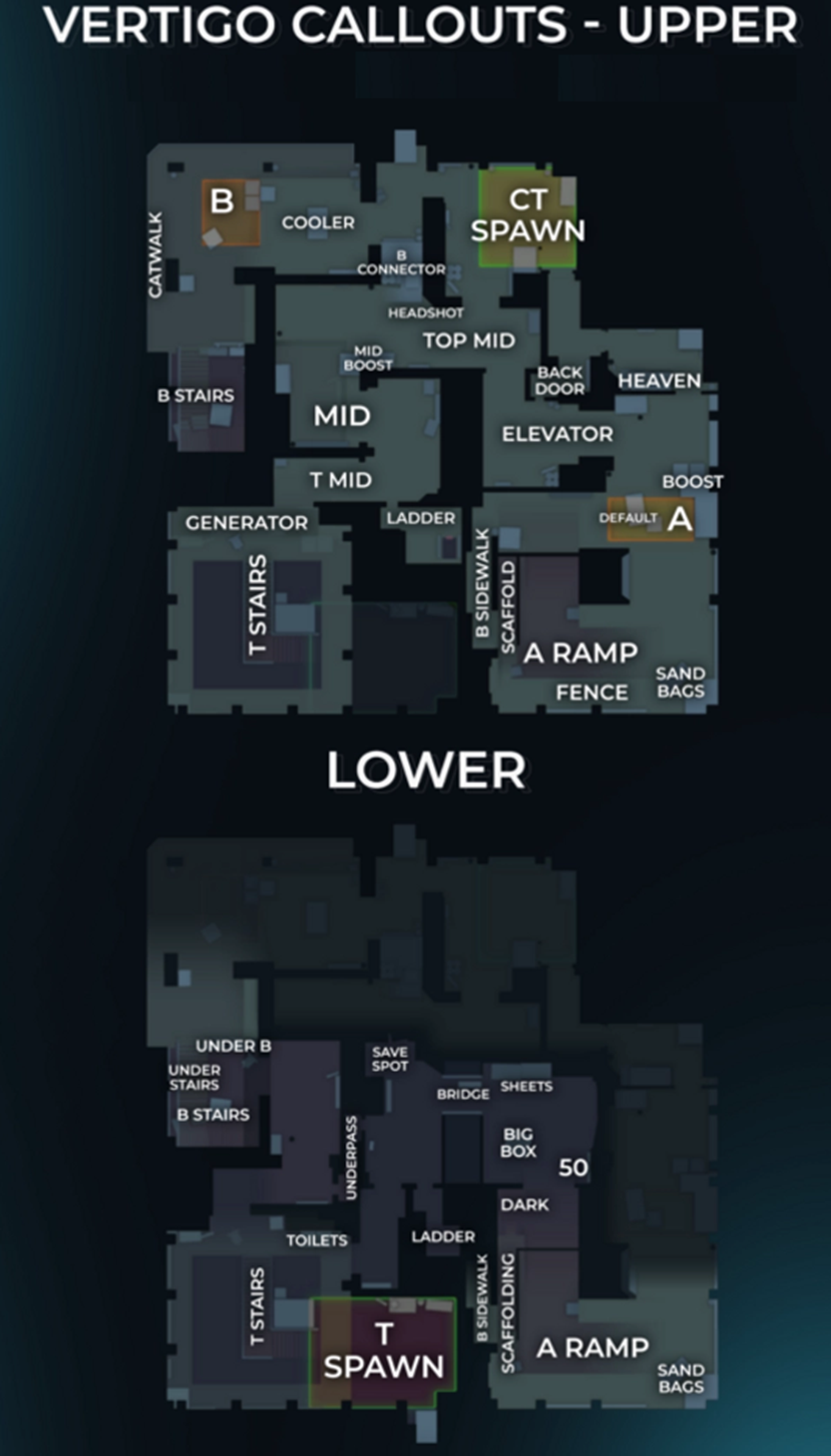
Essential CS2 Callouts Every Player Should Master
In the competitive landscape of CS2, effective communication can make or break a team's performance. Mastering essential CS2 callouts is crucial for coordinating strategies and ensuring that all team members are on the same page. Familiarize yourself with key locations on the map such as A Site, B Site, and critical chokepoints. Here are a few examples of callouts to master:
- Long A - The long hallway leading to A Site.
- Mid - The central area between A and B Site.
- Catwalk - An elevated path that gives a strategic view.
Another vital aspect of CS2 callouts is the ability to relay information quickly and effectively during high-pressure situations. Using shorthand terms and consistent phrases can enhance your team's reaction times. For example, when you spot an enemy, call out their location by saying a combination of the site and any landmarks, such as '3 players at B with one on truck'. Additionally, make use of common callouts like 'flank' to alert your teammates about potential threats from behind.
Counter-Strike is a highly popular team-based tactical first-person shooter that has captivated gamers around the world. Players engage in intense battles where they can either take on the role of terrorists or counter-terrorists, utilizing a range of weapons and tactics. If you're looking to enhance your gaming experience, you might want to know how to check trade history steam to keep track of your valuable in-game items and trades.
How to Effectively Utilize CS2 Callouts for Winning Strategies
In the fast-paced world of competitive gaming, especially in titles like Counter-Strike 2 (CS2), understanding the importance of callouts is crucial for developing winning strategies. Callouts are specific terms used to refer to locations on the map, which can significantly enhance team communication. By effectively utilizing these callouts, players can relay vital information quickly and precisely. To start, familiarize yourself with the essential callouts on popular maps. This foundational knowledge will help create a seamless flow of communication during matches, allowing your team to execute strategies without unnecessary confusion.
Additionally, implementing a structured system for using CS2 callouts can lead to improved gameplay. Consider using an ordered list to categorize callouts based on different scenarios:
- Defensive Positions
- Engagement Areas
- Rotational Paths
By breaking down the callouts in this way, players can quickly identify key locations when discussing tactics, making real-time decisions easier. Remember that consistency is key; establish clear callout terminology with your team to ensure everyone is on the same page. This practice not only increases efficiency but also enhances your overall strategy in high-stakes matches.
Top 10 Advanced CS2 Callouts That Will Elevate Your Gameplay
In the fast-paced world of Counter-Strike 2 (CS2), effective communication can mean the difference between victory and defeat. Mastering callouts is essential for coordinating with your team and gaining the upper hand on your opponents. Here are the Top 10 Advanced CS2 Callouts that will elevate your gameplay:
- Ramp: This area often serves as a strategic point for launching attacks or defending against pushes. Calling out 'Ramp' lets your teammates know the location of critical engagements.
- Red Container: Located in a key sightline, this visual marker can help your team position themselves effectively during exchanges.
- Backsite: Reference this when entering bomb sites; it allows your team to approach with caution and precision.
- Double Stack: Utilize this callout to signal when you or an enemy is using higher ground to gain an advantage in combat.
- Heaven: Perfect for signaling a positional advantage, 'Heaven' can alert your squad of threats above, ensuring everyone stays on their toes.
- Connector: Use this term when navigating around the map. It’s indispensable for quick rotations and swift strategic shifts.
- Side Alley: Useful in urban maps, this term can alert others to potential flanking maneuvers.
- Spawn: Always call out 'Spawn' when it's vital to keep the team informed about enemy respawn points.
- Close Left: In tight corners, this callout can mean the difference between surprise and disaster.
- Site A/B: Simple yet effective; specify which bomb site you are referring to for clarity during tense moments.